
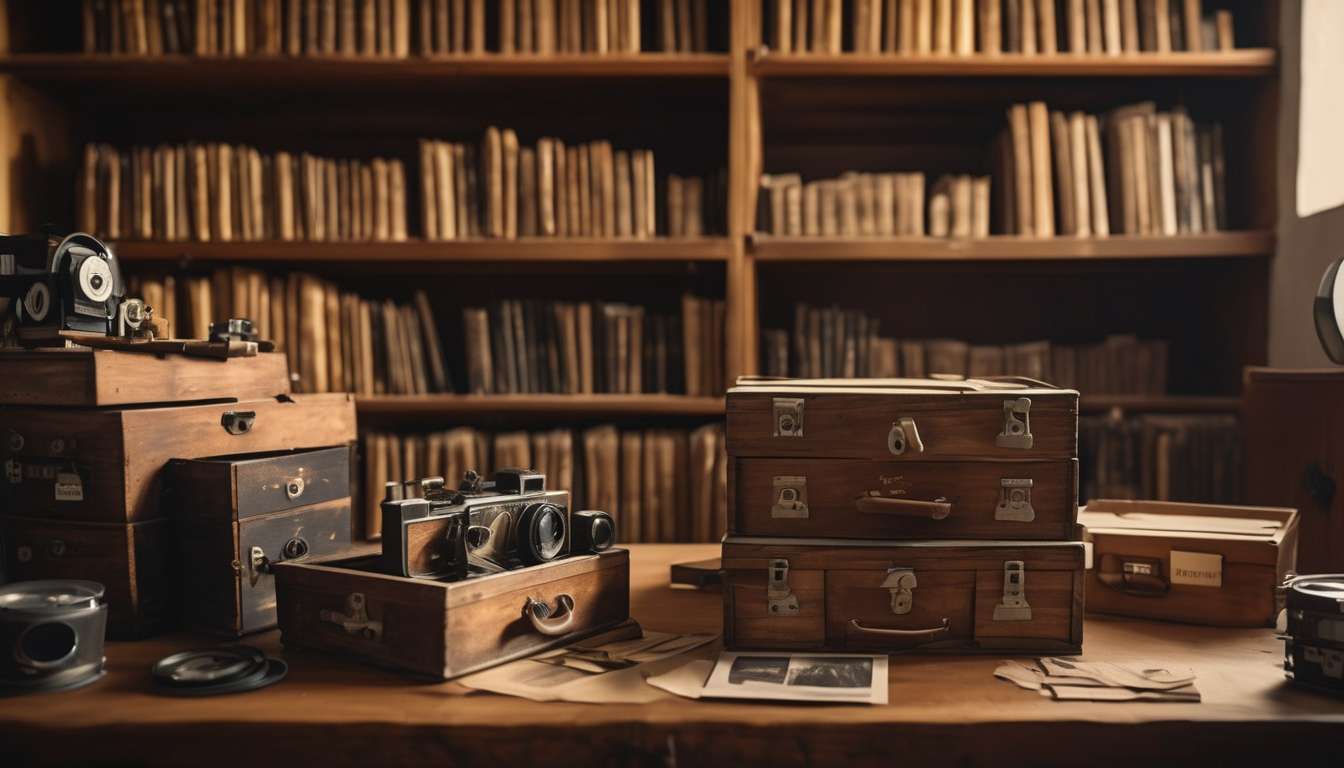
Every archive we enter reveals more than images; it uncovers the tangled relationship between cultural memory and technologies often relegated to the margins.
We connect seemingly disparate domains—art history, censorship law, queer studies, and the economics of print—to understand how adult photography carved a place in media records.
Together, we trace how collectors, librarians, and scholars navigated moral panics and legal restrictions to preserve negatives, magazines, and personal albums that would otherwise vanish.
We argue that these collections are not mere curiosities but vital documentary evidence of changing aesthetics, social mores, and media practices.
By foregrounding preservation choices, cataloging language, and access policies, we reveal how institutional decisions shaped public knowledge about sexuality and representation.
Our aim is to show that preserving adult photography is not an isolated archival task but a necessary intervention in how we remember and interpret visual culture.
Archival Significance
We recognize that preserving adult photography in historical collections secures visual evidence of cultural, technological, and legal shifts that other records often overlook.
We value erotic archives as communal memory that reveals changing norms, aesthetics, and production contexts.
By treating these materials as deserving of care, we create a welcoming repository where researchers and community members feel included rather than stigmatized.
We commit to ethical stewardship, acknowledging the subjects, creators, and audiences represented while balancing privacy and historical integrity.
Practical policies help us manage sensitive content responsibly:
- Clear provenance documentation.
- Consent assessments.
- Restricted-use tiers.
We prioritize digitization access to broaden participation:
- High-quality digitization.
- Comprehensive metadata.
- Contextual notes.
- Access controls to limit unnecessary exposure.
In doing so, we strengthen collective understanding and foster dialogue about sexuality, representation, and media technology.
Our approach treats adult photography not as marginal material but as essential evidence that enriches shared cultural history.
Legal Battles and Precedents
Many landmark court cases and statutes have shaped how we collect, preserve, and provide access to adult photography, and we’ll examine the precedents that continue to guide our policies.
We’ve seen rulings clarify obscenity standards, copyright limits, and privacy claims, and those decisions directly affect how erotic archives are managed.
Together, we navigate legal frameworks that balance public interest with individual rights, ensuring digitization and access follow lawful use and respect for creators and subjects.
We’re committed to ethical stewardship:
- Documenting provenance.
- Honoring consent where possible.
- Following takedown procedures when warranted.
Our community benefits when institutions adopt clear policies informed by precedent, so researchers, donors, and patrons feel included and protected.
We’ll continue monitoring case law and legislative changes, updating access protocols to reflect evolving standards.
By grounding our work in legal clarity and shared values, we maintain both scholarly integrity and communal trust, keeping these sensitive historical materials available in ways that are responsible, transparent, and welcoming to all who engage with them.
Cataloging Controversies
We’ll confront the tough questions that arise when cataloging adult photographs.
- How to describe content sensitively.
- How to balance researcher needs with privacy.
- How to handle contested provenance.
We’re committed to inclusive practices that let contributors, researchers, and communities feel welcome and respected.
- Contributors should be able to indicate preferences for description, access, and use.
- Researchers should have pathways for legitimate discovery that minimize harm.
- Community members should be invited into decision-making and feedback loops.
When we work with erotic archives, we adopt descriptive standards that avoid sensationalism while providing enough detail for discovery.
- Use neutral, respectful language focused on factual attributes rather than titillation.
- Include content warnings and clear metadata to aid user decision-making.
- Record contextual information (photographer, date, cultural context) to support research.
We’ll clarify policies for digitization access so users understand who can see what, under which conditions, and why restrictions exist.
- Publish access levels and the criteria used to determine them.
- Explain legal, ethical, and privacy reasons behind restrictions.
- Provide clear application or review processes for restricted access.
That transparency helps build trust and a sense of shared responsibility.
- Openly document decision rationales and governing principles.
- Offer mechanisms for appeal and community input.
Ethical stewardship guides our decisions about attribution, contextual notes, and contested ownership; we consult stakeholders and document choices openly.
- Engage claimants, communities, and subject-matter experts early in research and cataloging.
- Record attribution histories and the evidence that supports them.
- Publish contextual notes explaining ambiguous or disputed information.
We’ll maintain clear provenance records and dispute-resolution pathways so community members can participate in outcomes.
- Record chain-of-custody and acquisition details for each item.
- Provide transparent protocols for lodging and reviewing provenance disputes.
- Document final decisions and the reasoning behind them.
By centering dignity and shared governance, we make cataloging a collaborative act that preserves history without erasing or exploiting the people and communities represented.
- Prioritize consent, privacy, and harm reduction in all practices.
- Create governance structures that include community representation.
- Continually review policies in partnership with stakeholders to adapt to new concerns.
Preservation Techniques
We prioritize stable, reversible preservation methods.
- Proper housing, climate control, and high-quality digitization workflows protect delicate adult photographs while keeping options open for future technologies.
- Scans are high-resolution, metadata-rich, and stored redundantly to support research and responsible public engagement.
We create clear handling protocols tailored to erotic archives.
- Protocols make staff and community members feel welcome and confident participating in care.
- Training covers nondestructive techniques and inclusive practices so volunteers and colleagues contribute safely.
We balance physical conservation with access through digitization.
- Physical treatments are minimal and reversible to extend object lifespans without erasing history.
- Digitization provides access while preserving originals; digital preservation workflows and redundancy reduce risk.
We insist on ethical stewardship.
- Document provenance, respect privacy and consent, and establish access policies that reflect community standards.
- Transparent governance and shared responsibility foster trust among users, donors, and caretakers.
We maintain ongoing environmental and material care.
- Environmental monitoring and approved enclosures protect collections.
- Conservation interventions are conservative and justified, prioritizing long-term preservation.
By combining practical conservation measures with transparent governance and shared responsibility, we safeguard adult photography’s material record while fostering a sense of belonging and trust.
Collectors and Donors
Collectors and donors shape our holdings and responsibilities.
We need clear acquisition policies, transparent provenance documentation, and mutually respectful agreements that address consent, privacy, and future access.
We welcome collectors who trust us to care for material from erotic archives while acknowledging sensitivities and legal constraints.
We’ll build agreements that clarify ownership, restrictions, and expectations for digitization and access so contributors feel secure and seen.
We cultivate donor relationships on shared values.
- Ethical stewardship
- Accountability
- Ongoing communication
We’ll offer access and privacy options that respect contributors without marginalizing them.
- Embargoes
- Restricted-use metadata
- Curated access tiers
We commit to transparency and documentation.
We will provide donors with records of preservation actions and clear access pathways, fostering belonging through partnership rather than transaction.
When gifts require remediation or rights research, we will collaborate transparently.
We will share timelines and estimated costs with donors.
By centering donors in policy and practice, we strengthen community trust and expand collections responsibly.
This ensures erotic archives are stewarded with care, dignity, and equitable access for present and future users.
Queer Visibility in Archives
We will prioritize making queer lives and expressions visible in our collections while protecting community safety, privacy, and context.
We honor contributors and subjects by describing holdings with dignity, avoiding sensationalizing language, and recognizing intersectional identities.
We see erotic archives as cultural memory, not merely titillation, and we commit to preserving materials that reflect love, desire, resistance, and everyday life.
We will practice ethical stewardship by consulting communities about description, access levels, and restrictions.
- We will not assume consent for reuse.
- We will document provenance and respect requests for anonymity or contextual notes.
- We will negotiate digitization access with stakeholders to balance discoverability and safety.
- We will use tiered approaches when necessary so researchers and community members can engage without exposing vulnerable people.
We want people to find themselves in the record and feel that archives are for them.
We will sustain transparent policies, collaborative collecting, and responsive governance so our collections nurture belonging, accountability, and historical truth.
Digitization and Access
We’ll prioritize thoughtful digitization and layered access policies that increase discoverability while protecting privacy, provenance, and community-defined boundaries.
We’ll create clear pathways so researchers, artists, and community members can find and use items from erotic archives without feeling excluded.
We’ll describe collection contexts, rights, and restrictions alongside images to honor creators and subjects.
We’ll implement digitization access protocols that balance openness with consent.
-
Tiered permissions:
- Share descriptive metadata broadly to maximize discoverability.
- Gate sensitive materials behind vetted access for qualified users.
- Provide documented justifications for each permission level.
-
Consent-sensitive workflows:
- Record and respect consent choices from creators, subjects, and communities.
- Allow for retroactive changes where consent or community norms evolve.
We’ll build collaborative intake and review workflows so communities help shape access rules.
-
Community involvement:
- Co-design intake forms and review criteria with stakeholder groups.
- Include community reviewers in access decisions for culturally sensitive materials.
- Offer mechanisms for community members to request revisions or restrictions.
-
Flexible access options:
- Remote access for vetted researchers and partners.
- On-site access for materials requiring controlled environments.
We’ll maintain transparent, searchable catalogs and user-friendly interfaces so people can belong to a shared history.
- Catalog and interface features:
- Clear display of context, rights, and restrictions alongside images.
- Searchable metadata fields and filters for permission level, creator, date, and community notes.
- Accessibility and privacy-aware design.
We’ll monitor use and update policies responsively, recording decisions to support ethical stewardship.
- Ongoing stewardship practices:
- Log access requests, approvals, and denials.
- Review usage patterns and policy impacts regularly.
- Update access rules in consultation with communities and legal/ethical advisors.
Goal: Ensure collections remain living, trusted resources for everyone invested in preserving adult photography’s media record.
Ethical Stewardship
We will steward these collections with rigorous, transparent practices that center consent, dignity, and long-term care.
We recognize erotic archives hold personal and cultural histories.
- Prioritize consent documentation.
- Conduct provenance research.
- Undertake community consultation.
We will create access policies that balance openness with respect.
- Use tiered digitization access to limit sensitive exposure while enabling scholarship and belonging.
We commit to ethical stewardship through clear policies and procedures.
- Develop clear acquisition criteria.
- Establish retention schedules.
- Define procedures for responding to rights claims.
We will train staff in trauma-informed handling and inclusive description.
- Avoid voyeuristic language.
- Center subjects’ humanity.
- Provide ongoing training and support.
We will engage contributors and affected communities in governance.
- Ensure policies reflect diverse perspectives and evolving norms.
- Enable participatory decision-making and feedback mechanisms.
We will maintain secure, sustainable digital preservation so materials remain discoverable without exploitation.
- Implement technical safeguards and redundancy.
- Publish transparent metadata and access logs to build trust.
By combining accountability, community input, and technical safeguards, we will ensure erotic archives serve as responsibly managed resources that welcome researchers, creators, and communities into care-centered stewardship.
How do archives verify the authenticity and provenance of individual adult photographs or collections before accepting them?
We ask how archives verify authenticity and provenance.
Key documentary checks include:
- Paperwork and catalog records.
- Chain-of-custody documentation.
- Donor statements.
- Legal ownership documentation.
We compare materials with known references.
- Known editions and publisher records.
- Photographer or creator archives.
- Embedded metadata and inscriptions.
We apply physical and scientific examination when needed.
- Forensic tests on paper, ink, photographic emulsions.
- Conservation assessments and material analysis.
We consult and collaborate widely.
- Subject-matter experts and conservators.
- Communities connected to the work, stakeholders, and descendants.
We document findings transparently and respectfully.
- Clear reporting of methods and conclusions.
- Inclusive stewardship practices so all involved feel respected.
What role do museums and galleries play compared to private archives in exhibiting or contextualizing adult photography?
We see the Current Question as asking how museums and galleries differ from private archives in showing adult photography.
Museums and galleries curate with interpretive frameworks, public programming, and ethical review.
Key aspects:
- They provide contextualization through labels, wall texts, and catalog essays.
- They organize public programming (talks, panels, workshops) to foster inclusive dialogue.
- Ethical review processes guide decisions about display, access levels, and audience advisories.
- They aim to balance artistic intent, historical significance, and public responsibilities.
Private archives often prioritize preservation, researcher access, and owner discretion.
Key aspects:
- Emphasis on conservation, documentation, and controlled access for study.
- Access decisions may be governed by the owner’s preferences or institutional policies rather than public programming goals.
- They may lack the same level of interpretive infrastructure or public-facing educational initiatives.
We collaborate when possible, sharing expertise and loans.
Collaboration details:
- Museums/galleries may borrow materials from private archives for exhibitions, bringing interpretive resources and public reach.
- Private archives benefit from conservation support, cataloging expertise, and wider audiences.
- Partnerships can include joint exhibitions, shared provenance research, and coordinated access policies.
We advocate for transparent consent practices, contextual labeling, and harm minimization so communities feel respected and welcomed.
Advocacy priorities:
- Ensure clear documentation of consent and provenance.
- Provide contextual labels and content warnings to frame sensitive material.
- Implement harm-minimization strategies (restricted access where appropriate, community consultation).
- Engage affected communities in decision-making and programming.
Overall, museums/galleries emphasize public interpretation, education, and ethical stewardship; private archives emphasize preservation and owner-directed access — and collaboration between them can combine strengths while centering consent, context, and community care.
Are there international standards or organizations that guide the preservation and sharing of sexually explicit historical materials?
Short answer: There are no single global rules that govern preserving and sharing sexually explicit historical materials, but multiple international standards and professional bodies provide relevant guidance on ethics, access, and conservation.
Key international guidance
-
UNESCO: Offers broad policy frameworks on cultural heritage preservation and access that emphasize human rights, cultural diversity, and ethical stewardship. These frameworks can be applied to sensitive collections to inform retention, documentation, and responsible access practices.
-
IFLA (International Federation of Library Associations and Institutions): Provides guidelines on library and archival access, privacy, and freedom of expression. IFLA guidance helps institutions balance open access with restrictions needed for minors, privacy, or protection of vulnerable individuals.
-
ICOM (International Council of Museums): Issues ethical codes and conservation standards for museums that address collection care, provenance, access, and community engagement—useful for museums holding sexually explicit historical materials.
Regional laws and privacy regulations
-
National and regional legal frameworks (e.g., obscenity laws, child protection statutes, data protection regulations such as GDPR) critically shape what can be preserved, how materials may be displayed, and what access controls are required.
-
Privacy and consent rules affect materials involving identifiable people; requirements may differ by jurisdiction and by whether material is historical, archival, or newly acquired.
Institutional and professional safeguards
-
Institutional Review Boards (IRBs) or ethics committees: Many institutions rely on these bodies to review sensitive collections and research proposals, especially when living subjects or descendant communities are implicated.
-
Legal advisers: Legal counsel helps interpret local laws (obscenity, child protection, privacy, copyright) and advise on risk mitigation for access, digitization, and publication.
-
Professional networks and disciplinary norms: Archivists, curators, librarians, and conservators share norms and case studies through professional associations and networks that inform day-to-day decisions.
Balancing goals and values
-
Preservation vs. access: Conservation standards support long-term care of materials, while access policies determine who may view items and under what conditions (e.g., reading-room restrictions, redaction, restricted digital access).
-
Scholarly use vs. community values: Best practice includes consulting affected communities, researchers, and stakeholders to weigh historical value, educational use, and potential harm.
-
Protection of vulnerable subjects: Extra caution and possible restrictions are recommended when materials involve minors, non-consenting individuals, or groups at risk of stigmatization or legal harm.
Practical measures commonly recommended
-
Create clear collection policies that reflect international ethical guidance and local law.
-
Use access controls (on-site access only, closed stacks, restricted digitization, user agreements).
-
Apply metadata and content warnings to flag sensitive content.
-
Redact or anonymize identifying information when appropriate.
-
Document provenance and consent status thoroughly.
-
Engage legal counsel and community stakeholders before public dissemination.
If you’d like, I can:
-
Summarize specific UNESCO, IFLA, or ICOM statements or links relevant to sexually explicit historical materials.
-
Draft a sample institutional policy checklist for handling these materials.
-
Outline typical legal issues to review in a specific jurisdiction—tell me which country or region.
Conclusion
You’ve seen how historical collections keep adult photography’s media record alive, shaping legal precedents and sparking cataloging debates.
You’ll appreciate preservation techniques, donors’ roles, and archival ethics that balance access with care.
You know digitization expands reach while raising stewardship challenges, and you recognize queer visibility’s lasting impact on cultural memory.
Moving forward, you’ll support thoughtful, legally informed, and inclusive archival practices that protect materials and honor the communities they document.